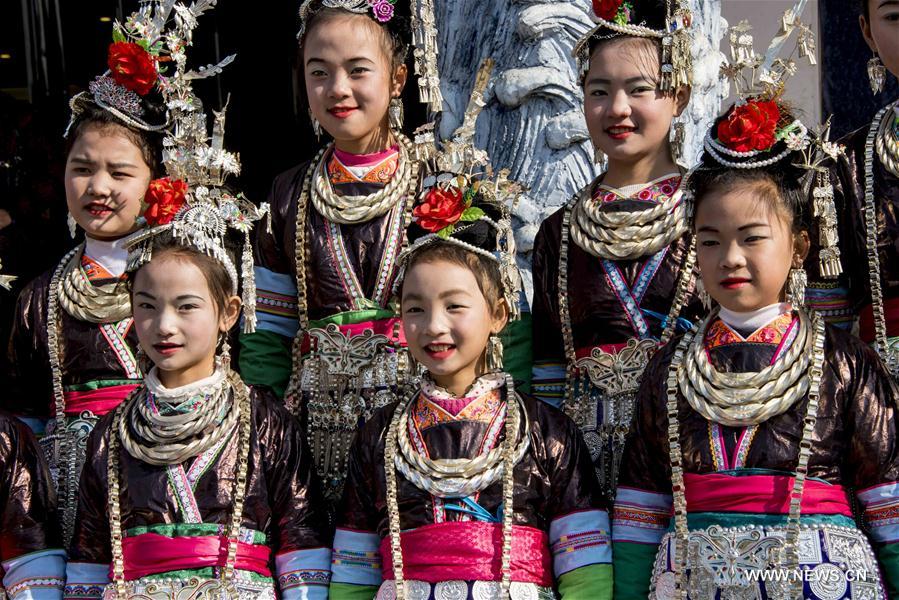
Grand Song of the Dong Ethnic Group
Introduction
The Grand Song of the Dong ethnic group is an integral part of the cultural heritage of the Dong people, predominantly found in Guizhou province in southern China. Renowned for its multipart singing, this traditional music form is performed without instrumental accompaniment or a conductor. It embodies the essence of Dong cultural expression and serves as a significant medium for transmitting their history, values and beliefs.
The Grand Song of the Dong ethnic group was inscribed on UNESCO's Representative List of the Intangible Cultural Heritage of Humanity in 2009.
Characteristics
The Grand Song is traditionally taught by masters to choirs of disciples and is performed in the drum-tower, a landmark venue for rituals, entertainment and meetings in a Dong village. The performances can also be more spontaneous, occurring in homes or public spaces. Each village typically boasts several choirs, often divided by age and sometimes gender, ensuring the widespread practice and continuation of this cultural heritage.
The Grand Song is characterized by its rich oral tradition and complex vocal harmonies. The repertoire is diverse, encompassing various themes and styles. Children’s songs, songs about nature, family and love all form part of the extensive collection. The songs often feature intricate vocal techniques, where performers skillfully mimic sounds from their natural surroundings, such as birds and animals, showcasing their deep connection to nature.
Cultural Significance
A popular saying among the Dong people, "rice nourishes the body and songs nourish the soul," aptly captures the profound cultural significance of the Grand Song. This tradition exemplifies the Dong people's method of passing on their culture and knowledge through music. It includes various genres such as ballads, children's songs and songs of greeting. Imitative songs, which test performers' virtuosity at mimicking animal sounds, are particularly notable. The Grand Song is an oral encyclopedia that narrates the Dong people's history, extols their belief in the unity of humans and nature, preserves scientific knowledge, expresses romantic love, and promotes moral values like respect for elders and neighbors.
The Grand Song plays a vital role in the social fabric of Dong communities. It is performed during important social events and festivals, serving as both entertainment and a medium for imparting cultural knowledge. The drum-tower, central to Dong villages, is the focal point for these performances, providing a space for community gathering and musical expression.
Inheritance
The tradition of the Grand Song is passed down through generations, maintaining its authenticity while also allowing for slight adaptations to suit contemporary contexts. The teaching process is typically informal, with younger members of the community learning from elders through participation and observation. This method ensures that the Grand Song remains a living tradition, continuously evolving yet deeply rooted in its historical context.








